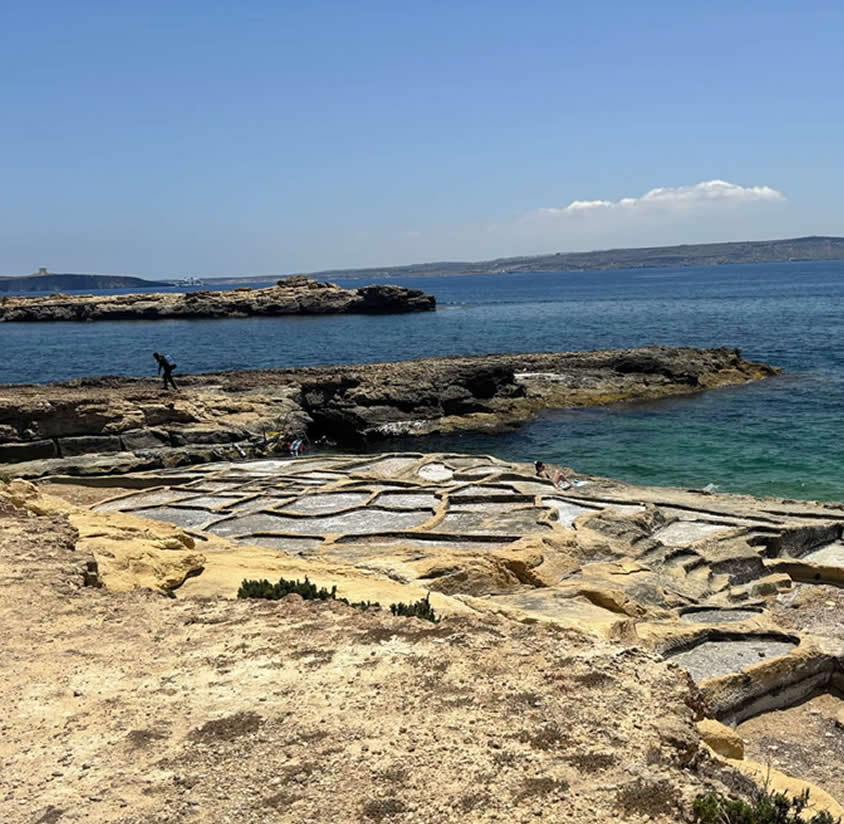
Xatt l-Aħmar Viewpoint
Xatt l-Aħmar is one of the quieter coastal areas on Gozo. The viewpoint looks across the southern coastline and the Comino Channel, with Malta visible beyond the water on clear days.
The name Xatt l-Aħmar means “Red Coast”, referring to the reddish-brown landscape around the coast. The area combines countryside, terraced fields, limestone coast and historic features.
Come for the open coastal views, the distinctive red landscape, Fort Chambray above the coast and the quieter atmosphere away from Gozo's busier visitor locations.
The coastal landscape
The landscape around Xatt l-Aħmar is a mixture of agricultural terraces, rubble walls and exposed limestone. The reddish soil gives the coast its distinctive appearance and contrasts strongly with the blue water of the channel.
From the higher ground there are open views towards Comino and Malta. The coastline below is rocky and exposed, making the area particularly attractive for photography.
Fort Chambray
Fort Chambray stands prominently above Xatt l-Aħmar. The fort was built by the Knights of St John in the eighteenth century as part of an ambitious plan to create a fortified city on Gozo.
Its elevated position gives Fort Chambray a commanding view of the surrounding countryside, Xatt l-Aħmar and the Comino Channel.
Salt pans
Historic salt pans can be found along sections of the rocky shoreline. These rock-cut features are part of the traditional salt-making landscape found in several coastal areas around the Maltese Islands.
The coastal walk
The area around Xatt l-Aħmar can be explored on foot, with paths leading through the countryside and towards the coast.
The terrain can be uneven and exposed. Take particular care close to the edge of the coast and avoid exposed areas during strong winds or rough weather.
Photography
Xatt l-Aħmar is an excellent location for landscape photography. The combination of reddish soil, pale limestone, agricultural terraces, blue sea and Fort Chambray creates a distinctive Gozo scene.
Early morning and late afternoon provide softer light, while the changing position of the sun can bring out the colours of the coastline and surrounding fields.